 ™
™
There's a gap between intention and action. You save a restaurant you want to try. You bookmark a travel destination. You screenshot a recipe for a dinner you'll definitely make this weekend. But then life happens. The weeks pass. By the time you remember that you wanted to try that restaurant, you've forgotten which one it was. The recipe sits somewhere unsaved. The travel plans remain just an idea.
This pattern is so common it has become almost invisible. Most people have dozens of saved recipes they never cooked, restaurants they never visited, and destinations they never booked. The save button creates a comfortable illusion of progress, you feel like you've done something productive by saving the item, even though saving and doing are completely different actions.
The Statistics Behind Abandoned Saves
The numbers tell the story clearly. Studies on digital behavior show that fewer than 15% of bookmarked recipes are ever actually prepared. Saved restaurant recommendations are revisited less than 10% of the time. Travel content that gets saved in January has less than a 5% chance of influencing a booking decision by June. The intention is genuine, but the follow-through almost never happens.
This gap isn't about motivation, it's about friction. Even if you want to act on your saved inspiration, the effort required to find it and remember the details is just enough to make you choose something easier instead. When you're deciding where to eat on a Friday night, you're not going to spend ten minutes scrolling through your screenshots looking for that restaurant someone recommended three weeks ago. You'll just pick somewhere familiar.
Traditional saving systems make this worse. Your saved items live in your bookmarks, your screenshots, your notes app, your Pinterest boards. They're scattered and require active retrieval effort. You have to remember to look, and you have to remember where you looked. Each additional step in the retrieval process reduces the likelihood that you'll actually use what you saved.
Bridging the Intention-Action Gap
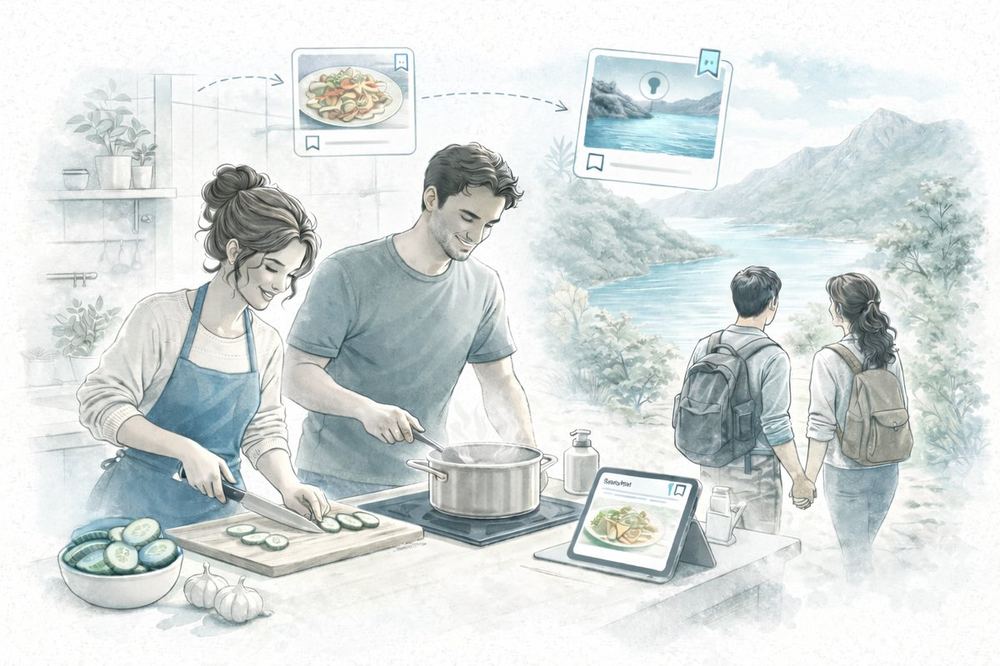
Sorti bridges this gap by making your saved items present and organized. When you save a restaurant, it's not just a link, it's part of your organized collection of places, grouped with other restaurants and destinations. When you save a recipe, it lives alongside all your other food inspiration, organized by the AI into a browsable food collection. These organized collections are easy to browse through, which means when you're actually ready to make plans, your ideas are right there waiting.
There's also a timing problem. Recipes are useful when you're deciding what to cook, usually in the late afternoon or evening. Travel destinations are useful when you're planning a trip, maybe once every few months. Restaurant recommendations are useful when you're hungry and looking for options, a spontaneous moment. But the moment you saved the content and the moment you need it are almost never the same moment. Without a reliable bridge between those two moments, the content stays saved and unused.
The Power of Visible Organization
The key difference is visibility. In a traditional system, saved items are hidden, buried in apps you don't regularly open, filed in folders you forget exist. In Sorti, your saves are organized by category and always accessible. When you're standing in the kitchen wondering what to cook, you open your food collection and see every recipe you've saved. When you're planning a date night, you open your places collection and see every restaurant you've bookmarked.
The shift is subtle but powerful: instead of items disappearing into a void, they stay organized and visible. And when your saved inspiration is visible and organized, it becomes real action. Recipes become meals. Restaurants become reservations. Travel ideas become booked trips. The gap between intention and action finally closes.