
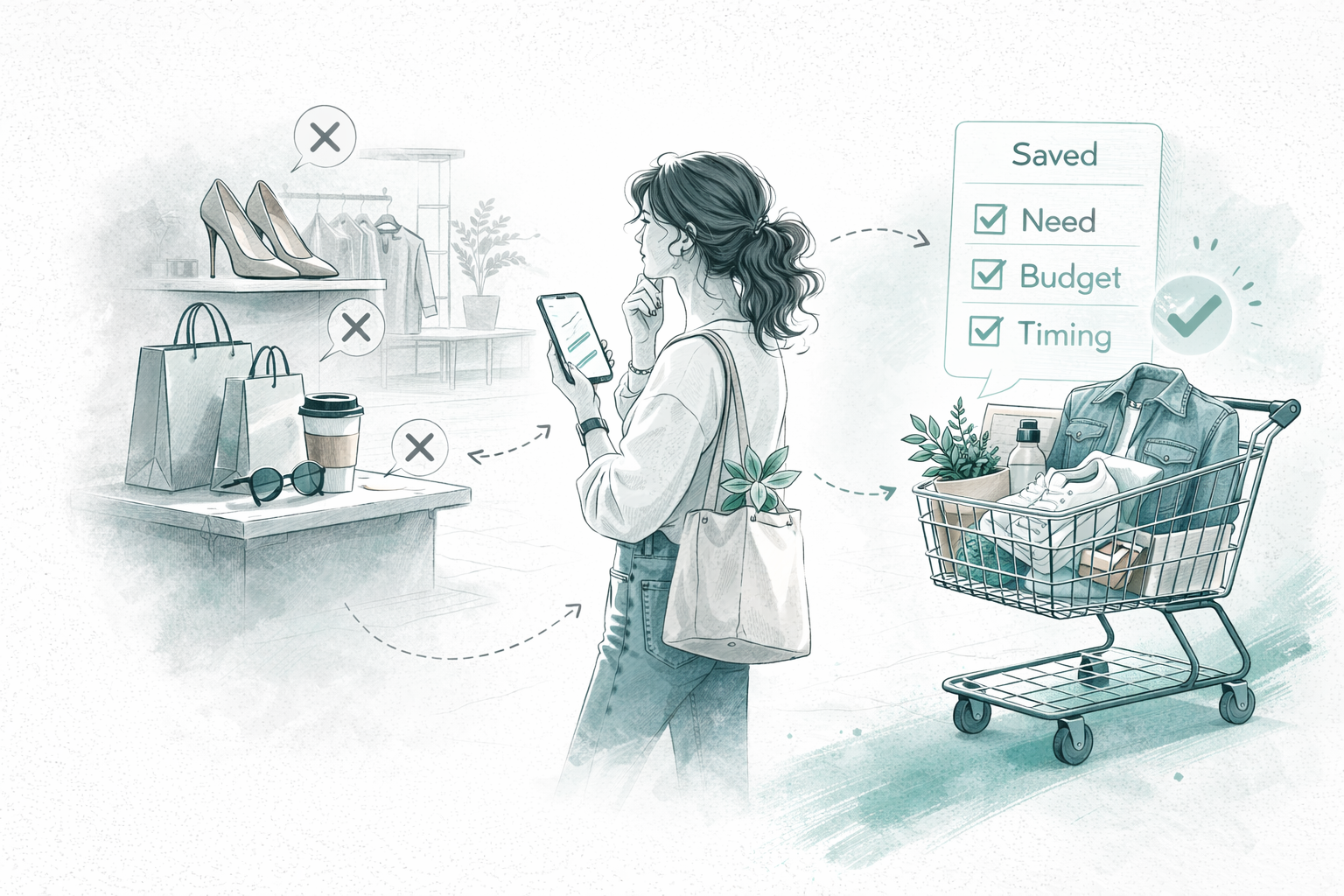
The moment you see a product you like, whether it's on Instagram, TikTok, or a website, you have a choice. Buy it now, or save it for later. For most people, "save it for later" is code for never buying it. But for some, it's the start of a habit loop that might not be so healthy.
Social commerce is designed to trigger impulse purchases. Short-form video, countdown timers, limited-edition drops, influencer endorsements with swipe-up links, every element is engineered to shorten the gap between seeing and buying. And it works. Impulse buying through social media has grown significantly, with studies suggesting that nearly 40% of online purchases are unplanned, driven by social media discovery.
The Psychology of Impulse Saving
The save button exists as a middle ground between buying immediately and scrolling past. You save items impulsively. A sweater from an influencer, a skincare product, a home decor item, a gadget from a TikTok ad. You're drawn to it in the moment, so you capture it. But when you revisit your saves weeks later, the urgency is gone. Sometimes you still want it. Sometimes you've completely forgotten why you saved it. Sometimes you realize the impulse has passed and you don't really need it.
This is actually a healthy process, giving yourself time between discovery and purchase, but it only works if you can actually revisit your saves in an organized way. Most people can't. Their saved products are scattered across Instagram saves, TikTok favorites, browser bookmarks, screenshots, and wishlist apps. There's no single place where they can see everything they've been considering buying, compare options, and make a deliberate decision.
Without that organized view, two things happen. Either you forget about the product entirely and never buy it (even when you genuinely wanted it), or you encounter it again and buy impulsively because you're afraid of losing it a second time. Neither outcome is ideal. The first means you miss out on things you actually want. The second means you buy without reflection.
Creating Space for Intentional Purchasing
Sorti introduces a more intentional way to manage your digital shopping. When you save items, they get organized automatically into your shopping collections. Instead of everything being a mix of things-you-maybe-want and things-you-definitely-want, Sorti's categorization helps you see what you've saved and why. Your shopping saves become a curated collection rather than a chaotic pile.
This organized view creates a natural "cooling off" period. You save a product, and it goes to your shopping collection. A few days later, when you browse through your collection, you can evaluate each item with fresh eyes. Do I still want this? Do I need it? Is it worth the price? The emotional charge of the original discovery has faded, and you can make a clearer decision. Products that still appeal to you after the cooling period are probably worth buying. Products that don't, you've just saved yourself money.
The app can also help you track price changes on saved items, bringing them back to your attention at the right moment. This shifts you from impulsive saving toward deliberate purchasing decisions. You're giving yourself time to think, but you're not losing track of things you genuinely want. The original links are always preserved, so when you decide to buy, you can go straight to the product page.
The result is smarter buying. Fewer regretted purchases. Less digital clutter. More intentionality about the things you bring into your life. Sorti doesn't tell you what to buy or not to buy, it gives you the organized space to make that decision for yourself, on your own timeline.
The Role of Your Save System in Buying Smarter
One underrated reason why people buy impulsively is that their save system punishes patience.
If you screenshot something but know from experience that you'll never find it again, saving it feels pointless. So you buy it now, before it's gone. The act of impulse buying is partly a rational response to a broken retrieval system.
When your save system actually works, when you know with confidence that you can save something and find it next week, you have real permission to wait. The urgency disappears. The purchase becomes a decision instead of a reaction.
What Intentional Buying Actually Looks Like
It looks like this: you see a coat you love. Instead of buying it immediately, you save it to Sorti. Over the next two weeks, you see it sitting in your shopping folder. You ask yourself: do I still want this? Do I need it? Is it worth the price?
Sorti's price tracking means you're also watching the price. If it drops 20%, you get a notification. If it doesn't, you make a fully informed decision about whether it's worth the current price.
No anxiety. No forgetting. No regret.
Building the Habit
The shift from impulse to intention doesn't happen automatically. It's a habit, and like all habits, it needs a trigger, a routine, and a reward.
Trigger: Seeing something you want to buy.
Routine: Save it to Sorti instead of buying immediately. Set a 48-hour rule, revisit it in two days before purchasing.
Reward: Better purchases, less guilt, more satisfaction with the things you actually buy.
Over time, your Shopping folder in Sorti becomes a wishlist that's also a reflection of your actual values, the things you consistently come back to, not the things that caught you at a weak moment.
The goal isn't to buy less. The goal is to buy better.
Download Sorti free on iOS and Android and start building a shopping habit that's actually yours, not just a reaction to an algorithm.